
EP 334 - Aura Pillar Two: Congruence - Say What You Do. Do What You Say. | Edge of the Napkin #22
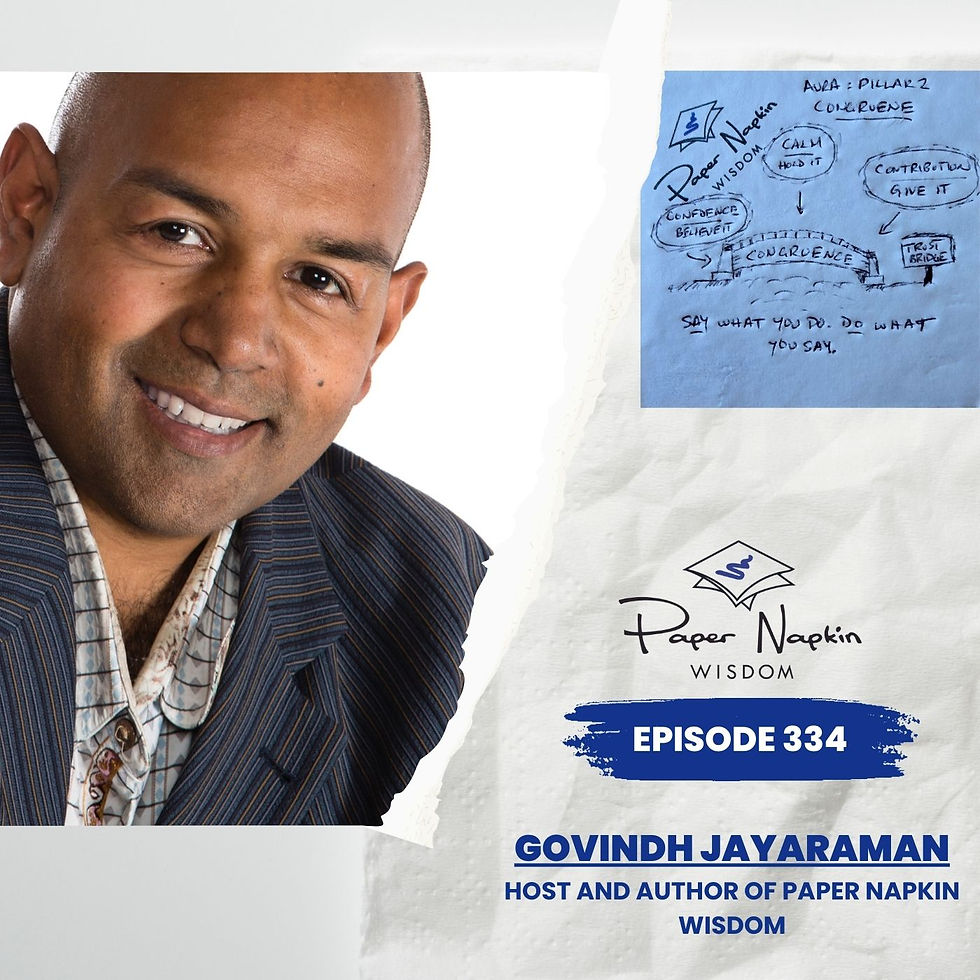
Some leadership traits are easy to spot.
Confidence shows up quickly. Calm is noticeable under pressure. Contribution is visible in results.
Congruence is different.
You don’t always notice it when it’s present — but you always feel it when it’s missing.
In Episode 334 of the Paper Napkin Wisdom Podcast, and #22 in the Edge of the Napkin series, Govindh Jayaraman explores the second pillar of the Magnetic Growth Aura: Congruence — the quiet discipline that makes confidence believable, calm receivable, and contribution sustainable.
This episode isn’t about being perfect, polished, or impressive.
It’s about alignment.
And more specifically, it’s about whether the life you’re living actually supports the words you’re using.
The Magnetic Growth Aura (A Quick Reframe)
In earlier Edge of the Napkin episodes, Govindh introduced the idea of a Magnetic Growth Aura — the felt experience people have when they’re around you.
Not your intentions. Not your credentials. Not your personality.
Your presence.
That Aura is shaped by four pillars:
Confidence – belief made visible
Congruence – alignment made reliable
Calm – space under pressure
Contribution – value beyond self
Congruence sits at the center of this structure.
It doesn’t shout. It doesn’t perform. But it quietly answers the question every nervous system is asking:
“Can I trust what happens next?”
When congruence is present, people relax. When it’s missing, people hedge.
Congruence Is Not Honesty — It’s Coherence
One of the most important distinctions in this episode is the difference between honesty and congruence.
Honesty is telling the truth. Congruence is living in such alignment that the truth doesn’t need defending.
You can say you value people — and still cancel meetings casually. You can say family comes first — and never be home. You can say you’re open to feedback — and explain yourself every time.
None of that makes you dishonest.
It makes you unintegrated.
Congruence is integration.
It’s when what you believe, what you say, and what you do all point in the same direction — not perfectly, but consistently enough that people can rely on it.
Where Congruence Quietly Breaks: The Street-Corner Yes
One of the most relatable moments in this episode happens far from a boardroom.
It happens on a sidewalk.
You run into someone from your past. You smile. You catch up.
And then the familiar phrase appears:
“We should get together sometime.”
Without thinking, you respond:
“Yes, absolutely.”
But you already know the truth.
You won’t follow up. You won’t schedule. You don’t actually intend to.
You didn’t say yes because it was true. You said yes because it was polite.
That moment seems harmless — but it trains incongruence.
Each time we choose comfort over truth, we teach ourselves that our words are flexible. And when words lose weight, trust slowly leaks.
Congruence doesn’t require being cold or abrupt.
Sometimes it sounds like something much simpler:
“It was really great to see you today.”
True. Kind. Clean.
Say What You Do. Do What You Say. (As a Practice)
In Episode 334, Govindh reframes “say what you do, do what you say” as training, not morality.
Congruence isn’t about being rigid. It’s about slowing your language down until it matches your reality.
Most incongruence doesn’t come from bad intent. It comes from a reluctance to feel momentary discomfort.
So we soften language. We overpromise. We say “sometime.”
But every incongruent yes becomes a future resentment.
Congruence asks a simple, uncomfortable question:
Am I willing to feel a little awkward now to stay aligned later?
Consistency, not intensity, is what restores trust.
Congruence and the Other Pillars
A powerful part of this episode is how Congruence is shown in relationship to the other pillars of the Magnetic Growth Aura.
Without Confidence, congruence turns into compliance and people-pleasing.
Without Calm, congruence becomes sharp honesty — technically accurate, emotionally unsafe.
Without Contribution, congruence becomes self-contained alignment that serves no one else.
But when all four pillars work together, something shifts.
Confidence gives congruence choice. Calm gives it softness. Contribution gives it meaning.
People stop bracing. They stop double-checking. They trust.
The Parable of the Echo Temple
One of the deeper moments in this Edge of the Napkin episode is the parable of the Echo Temple — a story about a teacher who mistakes repetition for integrity.
By clinging to consistency without awareness, the teacher stays aligned with his routine but disconnected from reality.
The lesson is subtle but powerful:
Congruence without confidence, calm, and contribution becomes dogma.
Living congruence, on the other hand, allows principles to stay intact while expression evolves.
The Napkin Question
If this episode were captured on a paper napkin, it would ask just one question:
Where do my words and my life stop touching?
That’s the work.
Not becoming someone else. Not doing more.
But bringing what you already believe into clearer alignment with how you actually live.
5 Key Takeaways from Episode 334
1. Congruence Is the Trust Bridge
Congruence makes confidence, calm, and contribution usable. Take Action: Notice one place this week where you say yes automatically — and pause.
2. Niceness Can Undermine Trust
Being polite at the expense of truth creates invisible misalignment. Take Action: Practice accuracy over reassurance in low-stakes conversations.
3. Congruence Is Trained, Not Claimed
Alignment is built through repeated, small choices. Take Action: Delay your yes by one breath or one sentence.
4. Incongruence Costs Energy Later
Every soft promise becomes future tension. Take Action: Replace “sometime” with a clear commitment — or none at all.
5. Living Congruence Feels Like Relief
When words and actions align, people relax. Take Action: Ask someone you trust where your actions speak louder than your words.
Final Thought
Congruence isn’t loud.
But it’s what makes everything else believable.
Say what you do. Do what you say.
And if something needs to change — let it start with alignment, not performance.
Challenge: Take out a paper napkin. Write down one place where you’ve been saying what’s nice instead of what’s true. Share your reflection with the hashtag #PaperNapkinWisdom — and notice what shifts when your words and your life start touching again.


Comments